

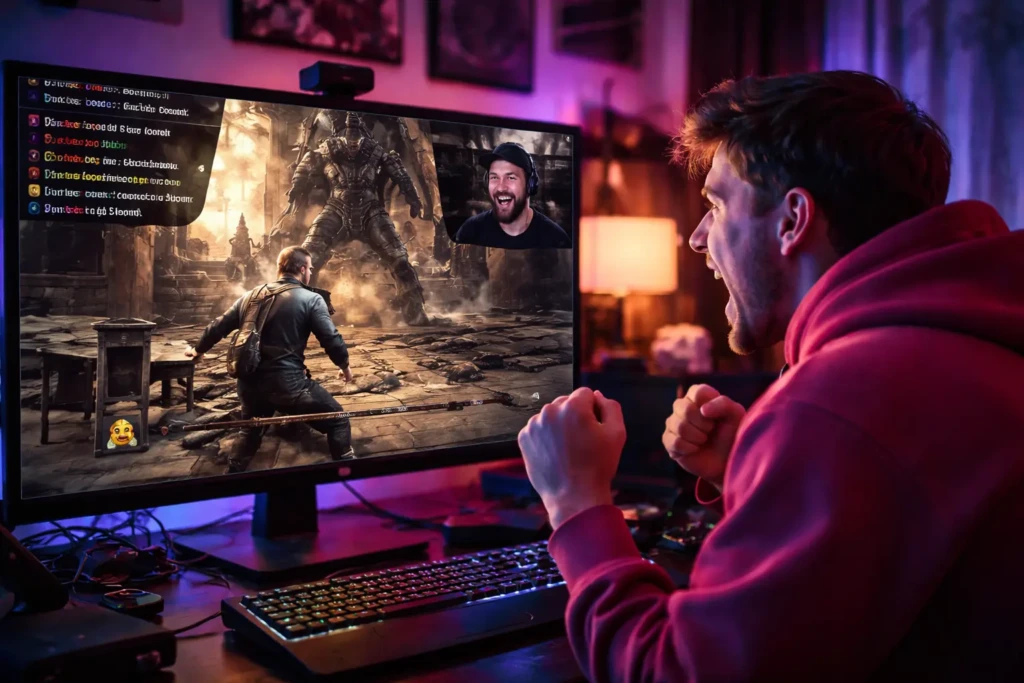
Commitment Shapes the Audience
Soulslike games demand commitment from the start. Players must learn systems. Players must accept failure. As a result, only invested players continue.
This commitment carries over to viewers. Audiences who watch Soulslike streams value depth. Also, they appreciate effort. Therefore, dedication defines the community.
Casual games invite quick attention. Soulslike games reward long-term focus. This difference shapes audience quality.
Difficulty Filters Engagement
Soulslike games challenge players consistently. Enemies punish mistakes. Progress requires learning.
Because of this, casual viewers often leave early. Dedicated viewers stay. Therefore, the remaining audience feels intentional.
This filtering improves conversation quality. Viewers understand mechanics. Also, they respect effort. As a result, engagement deepens.
Failure Creates Respect for Mastery
In Soulslike games, success never feels free. Players earn progress through persistence.
Viewers recognize this effort. Moreover, they respect improvement. Therefore, mastery feels meaningful.
Casual games often hide difficulty. Success arrives quickly. This reduces appreciation. Soulslike games restore value to skill.
Emotional Investment Grows Over Time
Their progress unfolds slowly. Bosses resist quick solutions. Areas demand exploration.
As a result, viewers invest emotionally. They follow attempts. They track learning. Therefore, each success matters.
Quick wins fade fast. Earned victories linger. This emotional weight strengthens audience attachment.
Shared Struggle Builds Community Identity
Soulslike communities form around shared struggle. Everyone remembers difficult moments. Everyone respects perseverance.
Viewers bond over frustration and relief. They share advice. They celebrate breakthroughs. Therefore, community identity forms naturally.
Casual games rarely create this bond. Low stakes limit shared memory. High stakes create culture.
Patience Becomes a Core Value
Soulslike games reward patience. Rushing leads to failure. Observation leads to progress.
Viewers adopt this mindset. They slow down. They analyze. Therefore, the viewing experience feels focused.
Casual content promotes speed. Soulslike content promotes restraint. This contrast attracts different audiences.
Streamer Growth Feels Authentic
In Soulslike streams, improvement shows clearly. Early mistakes contrast with later control.
Viewers witness growth. They follow development. Therefore, authenticity strengthens connection.
Casual games often hide growth. Skill ceilings appear quickly. Soulslike games extend learning curves. This extension sustains interest.
Lore Encourages Long-Term Discussion
They hide story within environments. Lore unfolds through discovery.
Viewers speculate. They analyze meaning. They revisit details. Therefore, engagement continues off-stream.
Casual games explain everything directly. Also, mystery disappears quickly. Soulslike ambiguity invites discussion.
Examples That Show the Difference
Games like Dark Souls established this audience pattern. Difficulty shaped respect. Persistence shaped loyalty.
Later, Bloodborne intensified emotional investment. Aggression demanded confidence. Viewers followed mastery closely.
More recently, Elden Ring expanded access while preserving challenge. Freedom allowed pacing. Dedication remained essential.
Each title attracted audiences willing to commit.
Dedication Sustains Long-Form Viewing
These games resist short sessions. Bosses demand time. Progress spans streams.
Because of this, viewers return. They want resolution. Also, they want closure. Therefore, retention improves.
Casual games resolve quickly. Soulslike games extend narratives. Extended narratives sustain loyalty.
Why This Matters for Streaming Communities
Dedicated audiences create stability. They support streamers. Also, they respect effort. They contribute meaningfully.
Soulslike games attract these audiences by design. Difficulty filters commitment. Mastery earns respect. Shared struggle builds culture.
For communities like Pop’s Lounge, this alignment matters. Dedicated viewers build stronger spaces. Stronger spaces last longer.
Final Thoughts on Soulslike Games
Soulslike games attract more dedicated audiences because they demand patience, effort, and emotional control. These demands filter viewers naturally.
Where casual games chase numbers, Soulslike games cultivate loyalty. Also, that loyalty creates depth. Depth creates community. Community sustains streaming over time.