

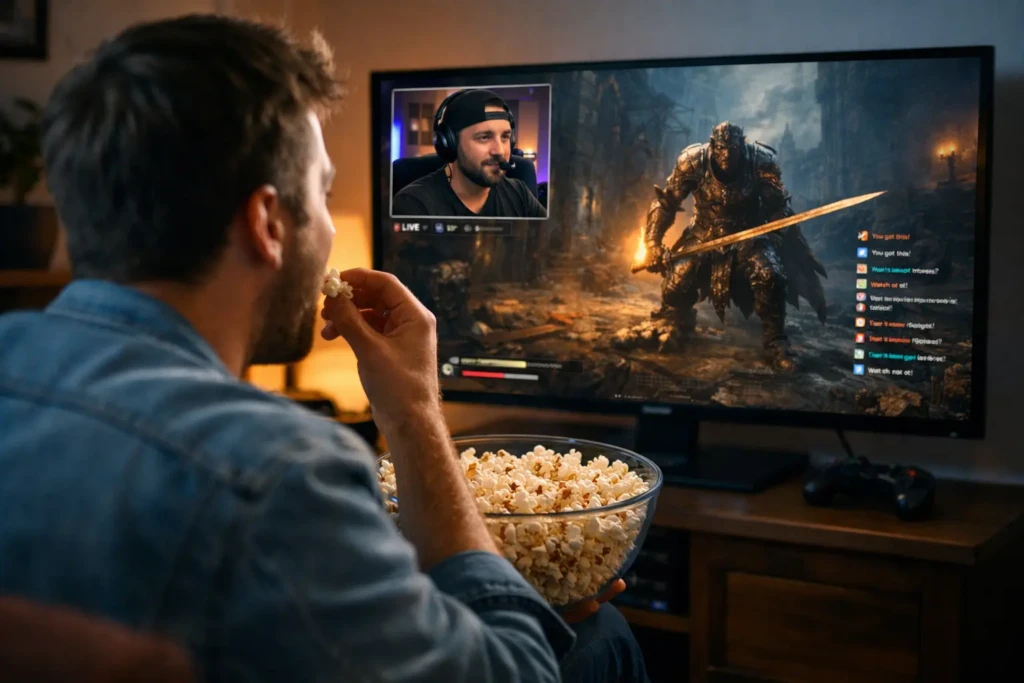
Observation Activates Emotional Learning
Watching others play games triggers powerful psychological responses. The brain mirrors action and emotion. As a result, viewers experience tension and relief without direct risk. This process feels engaging and safe.
Moreover, observation allows learning without consequence. Viewers study patterns. They predict outcomes. Therefore, attention stays high throughout the stream.
Unlike passive media, gaming streams invite constant anticipation. Each moment carries potential change. This uncertainty fuels engagement.
Failure Creates Narrative Momentum
Failure plays a crucial role in enjoyment. When a player fails, the story deepens. Stakes rise. Curiosity grows.
Because failure delays success, tension builds naturally. Viewers wonder what will change. They look for improvement. Therefore, investment increases.
Additionally, failure humanizes the streamer. Mistakes reveal vulnerability. Vulnerability invites empathy. As a result, viewers connect more deeply.
Success Triggers Shared Reward
Eventually, success arrives. Bosses fall. Obstacles break.
Because failure preceded victory, the emotional payoff feels stronger. Dopamine spikes through anticipation and release. Viewers share this response.
Moreover, shared success strengthens social bonds. Chat reacts together. Emotions synchronize. Therefore, the reward feels collective rather than individual.
This shared triumph explains why victory moments go viral. Emotion spreads faster than achievement alone.
Anticipation Drives Attention
The brain thrives on anticipation. Uncertain outcomes keep focus sharp.
Watching a difficult encounter activates prediction. Viewers guess timing. They anticipate mistakes. They expect adaptation. As a result, engagement remains steady.
In contrast, guaranteed outcomes reduce interest. Predictability lowers arousal. Difficulty restores uncertainty. Therefore, attention remains locked.
Empathy Enhances Emotional Impact
Viewers empathize with struggle. They recognize frustration. They remember similar experiences.
This recognition creates emotional alignment. Viewers feel the stress. They feel the relief. Therefore, the experience feels personal.
Empathy intensifies emotional peaks. Both failure and success matter more. This dynamic sustains long viewing sessions.
Learning Without Responsibility Feels Safe
Watching others fail provides learning without personal cost. Viewers absorb strategies. They note errors. They understand systems.
Because responsibility stays external, stress remains low. Therefore, the experience feels comfortable.
This safety encourages curiosity. Viewers remain open. They stay engaged longer.
Pattern Recognition Rewards the Brain
Games rely on patterns. Enemies telegraph attacks. Systems repeat mechanics.
Viewers enjoy spotting these patterns. Recognition creates satisfaction. Therefore, the brain rewards attention.
When success follows recognition, satisfaction multiplies. Viewers feel smart. They feel involved. This reinforces engagement.
Social Validation Strengthens Enjoyment
Streams create shared emotional spaces. Viewers react together. They validate reactions through chat.
Seeing others respond confirms emotional interpretation. Therefore, enjoyment increases.
Social proof amplifies reactions. Laughter spreads. Tension spreads. Celebration spreads. This collective response intensifies experience.
Contrast Sharpens Emotional Peaks
Failure and success gain meaning through contrast. One defines the other.
Without struggle, success feels flat. Without success, failure feels pointless. Together, they create rhythm.
This rhythm mirrors storytelling. Rising action precedes climax. Therefore, gaming streams follow narrative structure naturally.
Control Through Distance Reduces Stress
Watching failure feels safer than experiencing it. Emotional distance lowers stress.
Viewers enjoy challenge without consequence. They experience excitement without risk. Therefore, relaxation remains intact.
This balance explains why stressful games feel comforting to watch. Distance transforms anxiety into entertainment.
Examples That Reveal the Effect
Games like Dark Souls highlight repeated failure and learning. Viewers track improvement. This is why Fail and Succeed in Games is so important.
Titles like Elden Ring expand this dynamic through freedom and discovery. Viewers anticipate choices.
Even older games like Skyrim create failure through experimentation. Viewers enjoy unexpected outcomes.
Each example reinforces the same psychological loop. Failure engages. Success rewards.
Why Fail and Succeed in Games Drives Streaming Popularity
Streaming thrives on emotion. Failure introduces tension. Success releases it.
This cycle keeps viewers present. It sustains attention. Therefore, streams outperform static content.
For communities like Pop’s Lounge, this insight matters. Emotional rhythm builds loyalty. Shared experience builds culture.
Final Thoughts on how we Fail and Succeed in Games
We enjoy watching others fail and succeed because the brain craves contrast, anticipation, and shared reward. Failure creates story. Success completes it.
Through empathy, learning, and social validation, streams transform struggle into entertainment. This psychological loop explains why challenging games dominate live platforms. Where failure exists, meaning grows. Where success follows, connection deepens.