

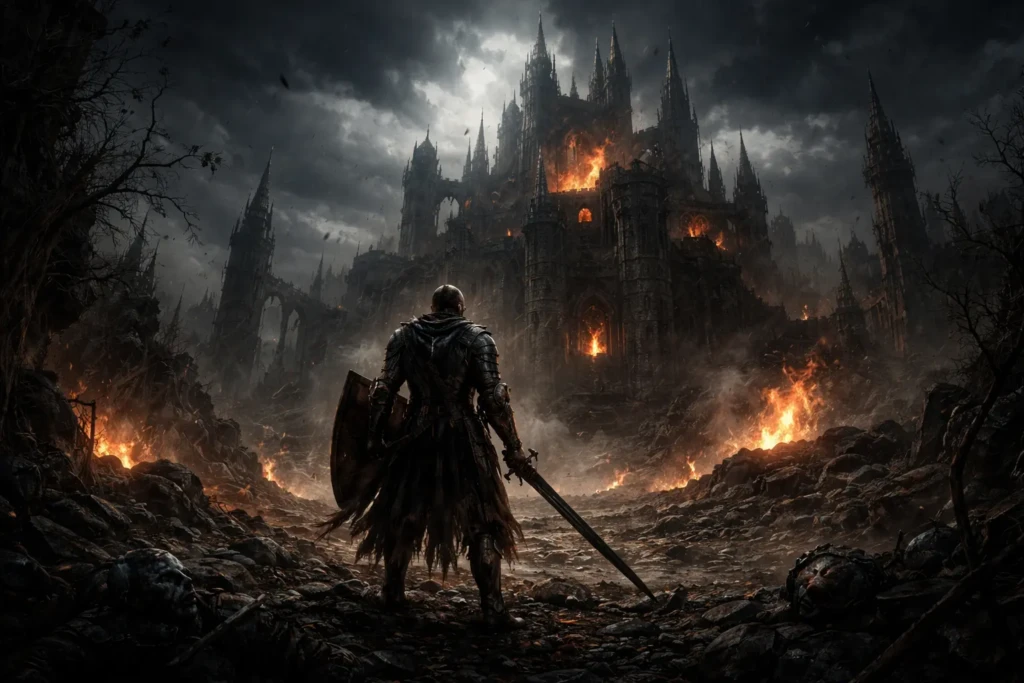
Challenge as a Training Ground
Souls games demand more than fast reflexes. They demand emotional discipline. From the first encounter, players face failure. Enemies punish mistakes. Progress feels slow. As a result, players confront frustration early.
Instead of avoiding discomfort, these games force engagement with it. Therefore, players begin to manage reactions. Emotional control becomes a requirement. Without it, progress stops.
Failure Becomes a Teacher
First, Souls games normalize failure. Death happens often. The game does not apologize. The game does not soften consequences.
Because of this, players adjust expectations. They stop reacting emotionally to loss. Instead, they analyze mistakes. This shift changes behavior. Players replace anger with curiosity.
Moreover, repetition reinforces patience. Each attempt builds familiarity. Each failure provides information. Therefore, emotional spikes decrease over time.
Delayed Gratification Builds Discipline
Souls games avoid instant rewards. Progress comes slowly. Boss victories require preparation and persistence.
As a result, players practice delayed gratification. They learn to wait for results. They learn to stay focused. This skill transfers beyond games.
Furthermore, success feels earned. Effort creates satisfaction. Therefore, players associate calm persistence with reward.
Stress Exposure in a Controlled Environment
Souls games create tension. Music rises. Enemies pressure timing. Stakes feel high.
However, this stress remains safe. Players experience pressure without real-world consequences. Because of this, they practice regulation.
Over time, players remain calm under pressure. Heart rate stabilizes. Focus improves. Therefore, emotional resilience grows naturally.
Pattern Recognition Replaces Panic
Enemies follow patterns. Bosses telegraph attacks. Observation leads to survival.
Initially, panic dominates reactions. Players rush. Players misjudge timing. Failure follows.
Gradually, players slow down. They observe details. They wait for openings. As a result, emotional reactions soften. Logic replaces impulse.
This habit strengthens emotional control. Players respond instead of reacting.
Personal Responsibility Encourages Self-Regulation
Souls games never blame external factors. The game never cheats. Difficulty feels fair.
Therefore, players accept responsibility. They adjust strategy. They refine skills. Emotional excuses lose value.
This mindset builds accountability. Players focus on improvement. As a result, frustration transforms into motivation.
Examples Across the Genre
Games like Dark Souls establish this foundation. The experience teaches patience through punishment. The world demands respect.
Bloodborne accelerates emotional training. Aggressive combat forces confidence. Fear punishes hesitation.
Sekiro: Shadows Die Twice sharpens focus. Precision matters. Emotional control determines success.
Later, Elden Ring expands access. Freedom allows pacing. Emotional learning adapts to player choice.
Each title reinforces the same lesson. Calm minds perform better.
Persistence Builds Emotional Endurance
Long boss fights test stamina. Repeated attempts exhaust patience.
However, players who persist build endurance. They tolerate discomfort longer. They maintain focus. Therefore, emotional stamina increases.
This endurance mirrors real-world challenges. Difficult tasks require sustained effort. Souls games simulate this demand.
Confidence Replaces Fear
Eventually, players trust themselves. They enter fights with composure. They accept risk calmly.
Confidence grows from mastery. Mastery grows from control. Therefore, fear loses power.
Players carry this confidence outside the game. Stressful situations feel manageable. Emotional responses remain measured.
Final Thoughts
Souls games train emotional control through design. They reward patience. Souls Games punish impulse. They reinforce responsibility.
Through failure, stress, and persistence, players develop regulation skills. These skills extend beyond gaming. Calm focus replaces frustration. Emotional strength replaces reactivity.
For players willing to endure discomfort, Souls games offer more than challenge. They offer emotional growth.